There may be mistakes…
If Gemini can make mistakes, why can’t we?

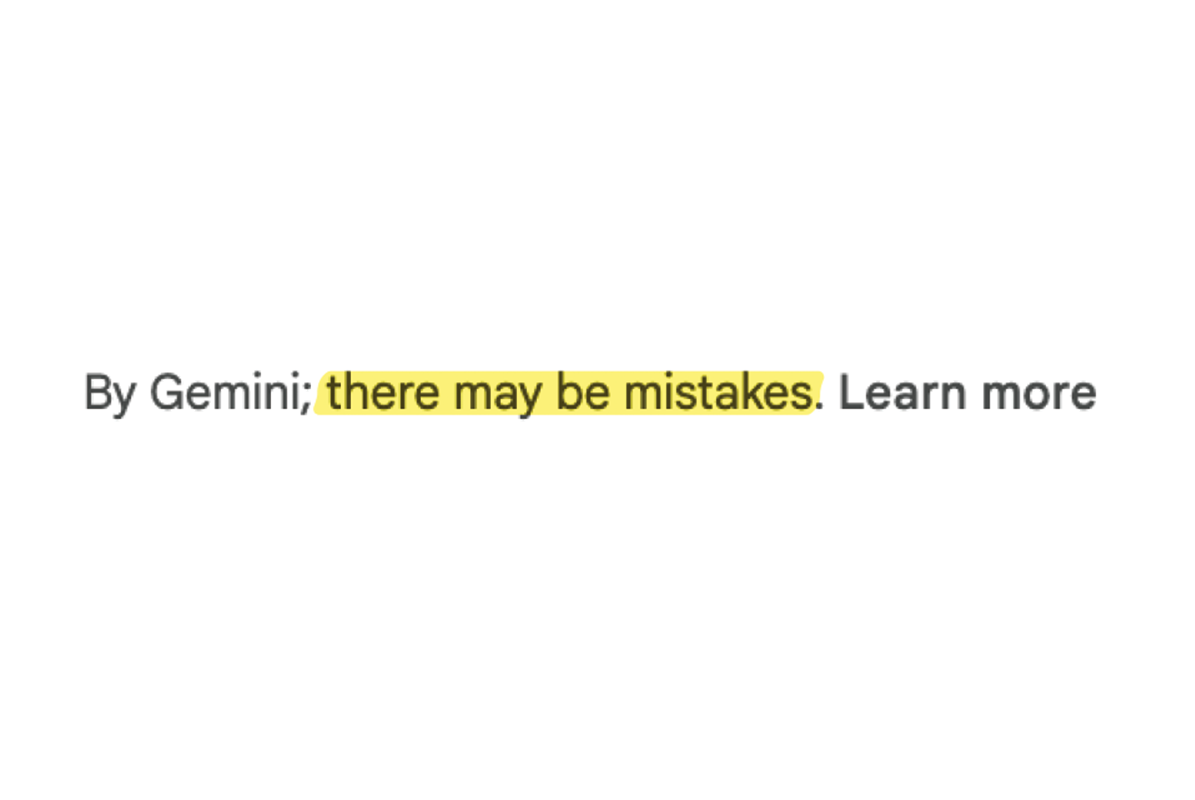
Last week I got laid off. I’d known it was coming for a while so, while it’s sad, I was ready and I’m genuinely excited for whatever’s next. The layoff isn’t what this post is about, though. It’s about the AI Overview that appeared at the top of the layoff email I received—and, more specifically, the disclaimer below it:
“By Gemini; there may be mistakes.”
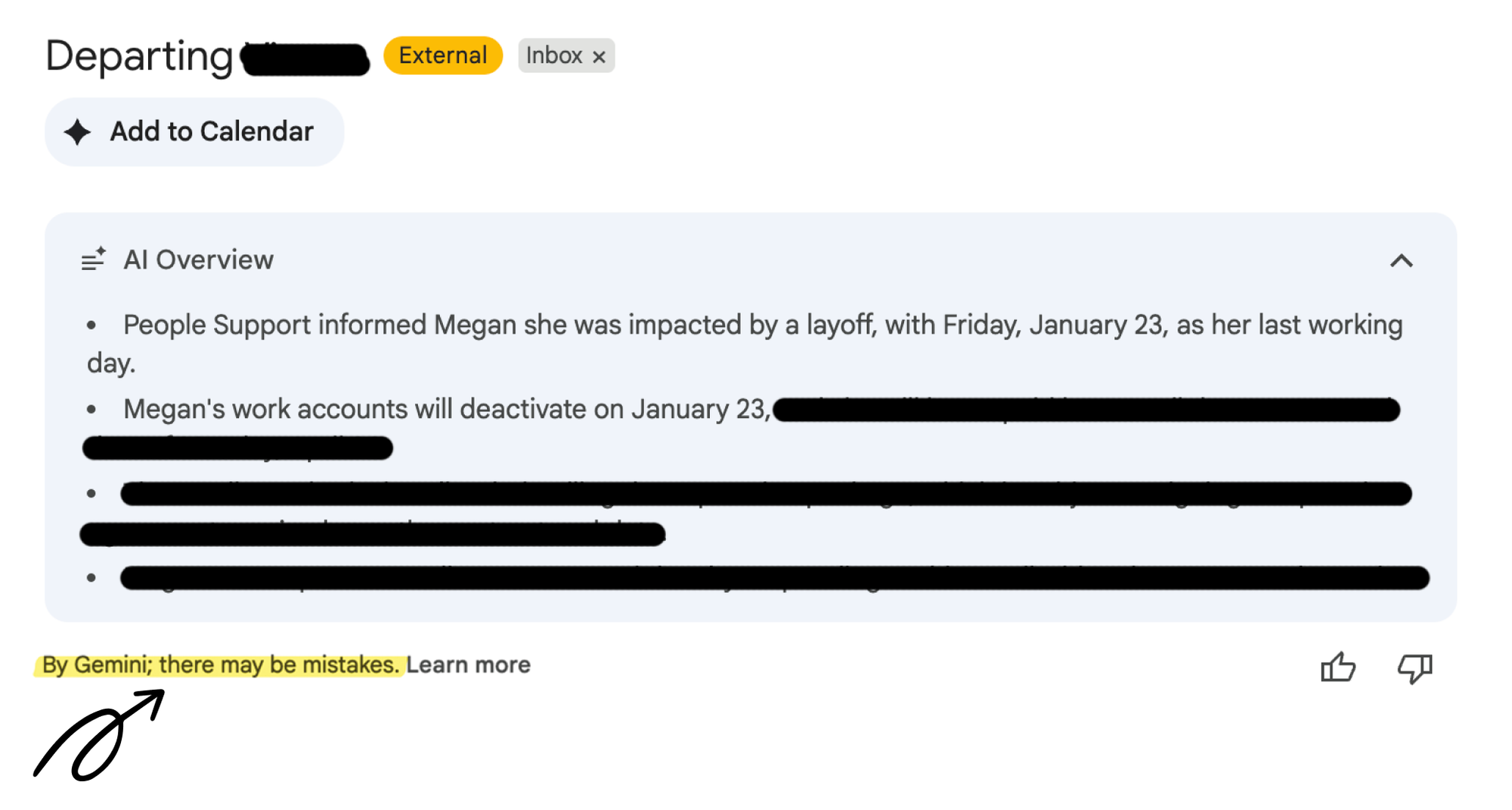
Similar little notes pop up in most AI tools… When conferring with Chatty G: “ChatGPT is AI and can make mistakes. Check important info.” Or in the AI Overview when Googling for medical advice: “This is for informational purposes only. For medical advice or diagnosis, consult a professional. AI responses may include mistakes.”

These notes are designed to cover these companies’ butts and I’ve seen this language countless times—but this time it made me think.
My first thought was, “Uh, yeah laying me off is a mistake!” But my next was:
If Gemini and ChatGPT and all these other AI tools can make mistakes, why can’t we?
Before I continue, I want to be clear: I don’t think AI tools should be allowed to make mistakes in many of the contexts where these disclaimers appear. It’s wild that mistaken AI Overviews are burying legitimate, factual information in search results, and horrifying that the mistaken advice of AI chatbots is leading people to make life-threatening decisions.
This is not an assertion that we should excuse Gemini or ChatGPT's mistakes. We shouldn't. But I do think we can learn from the way AI learns from its mistakes.
The permission to make mistakes
AI makes mistakes and learns from them. It adjusts its training data based on human feedback so it won’t continue to make the same mistakes over and over again. As it makes mistakes and learns from them it gets better and better.
When generative AI first came on the scene, it made hand after hand with extra fingers. But even though it was making mistakes all over the place, it kept on making weird hands and now it can make a pretty decent regular-looking hand.
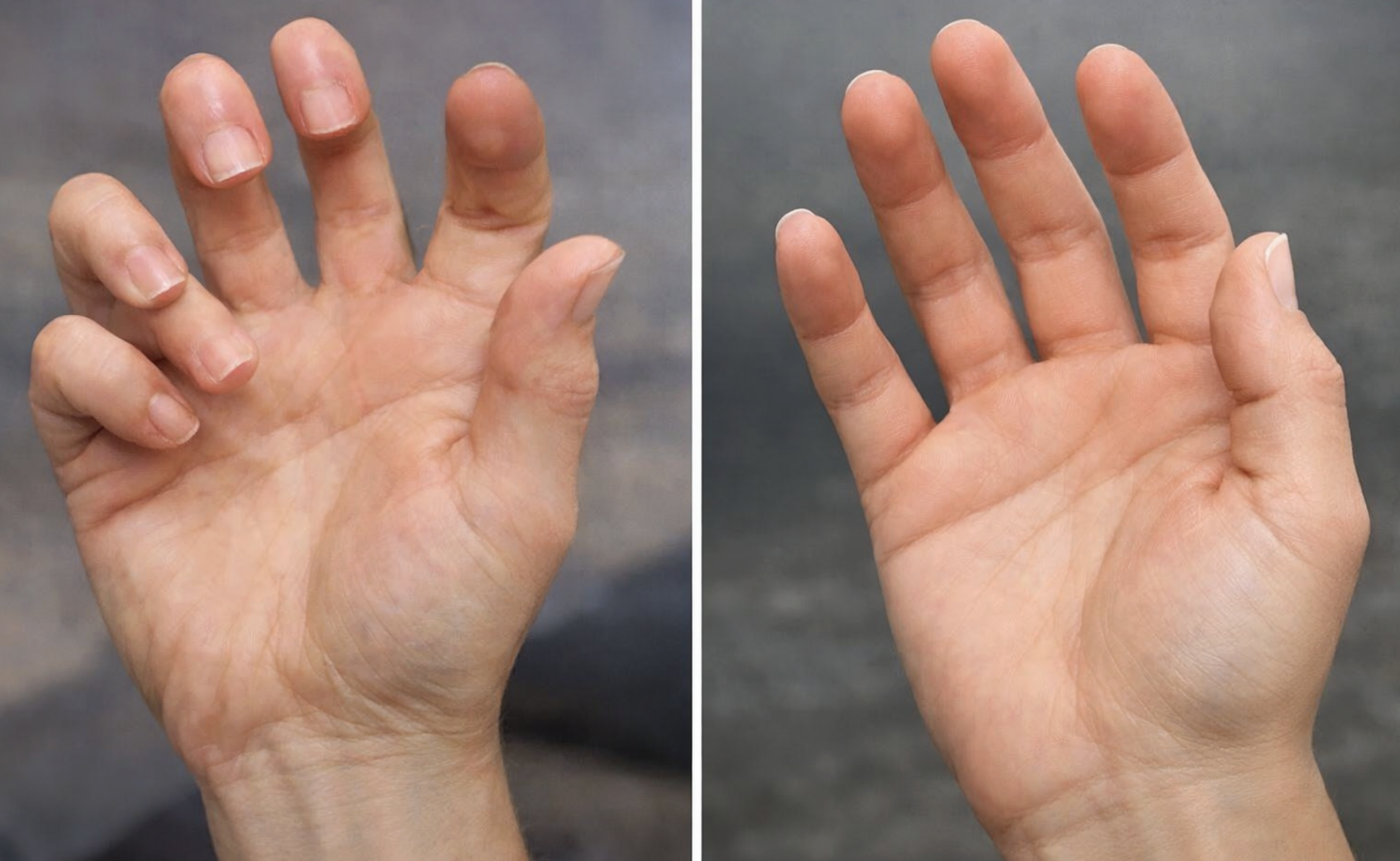
AI improves because it gives itself permission to make mistakes. (Or, I guess I should say, the people behind AI allow it to make mistakes. AI doesn't actually have the sentience to give itself permission—at least not yet 😱).
Humans learn from mistakes, too. But it's ingrained in many of us to avoid mistakes at all costs. What if, instead, those of us who are mistake-averse took a hint from AI and gave ourselves permission to make mistakes—and to learn from them? What if we became comfortable with the idea that when we put ourselves out there, like with Gemini, "there may be mistakes"?
I'll speak for myself and say that I have always been incredibly anxious about making mistakes. Something might seem like a good idea, but what if I end up embarrassing myself? What if I inadvertently offend someone? What if I fail? As a result, there are a lot of ideas I've never shared and projects that never came to fruition. And those things may have flopped—but they also may have been awesome. I'll never know because I never put them out there.
Thomas Edison is known as one of the most successful inventors of all time. But Edison failed epically so many times. He was successful because he wasn't afraid to make mistakes, to try and to fail. He famously said:
“I have not failed 10,000 times—I’ve successfully found 10,000 ways that will not work.”
I've been thinking about this a lot in recent months with my layoff looming. I've been thinking about what's next for me and, now that I have some free time on my hands, I have the opportunity to do anything I want. But I'm going to need to put myself out there and take risks if I want to succeed.
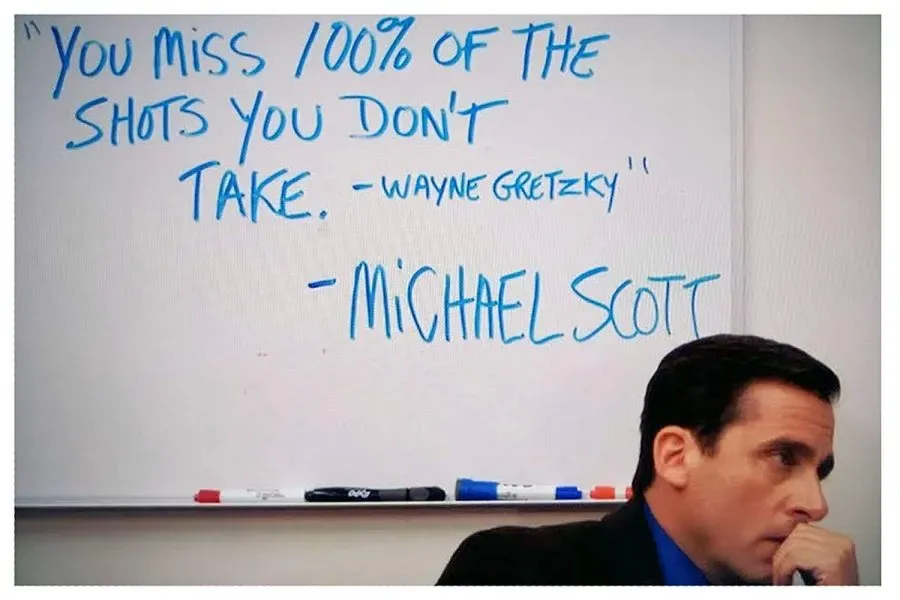
So this year, I made one New Year's resolution: to fail more. In order to fail more I'll need to put myself out there more—try new things, embarrass myself, make mistakes, put myself in situations that force me to get comfortable with being uncomfortable.
Getting comfortable making mistakes
Getting comfortable making mistakes is easier said than done. But I'm going for it, so I figured I'd share some of the things that are helping me, in the event they help you too.
Wise words about making mistakes
Spiritual teacher Eknath Easwaran encouraged meditation on words, quotes, and passages. Spending time slowly reading and rereading quotes can help us internalize their meanings.
I recently completed my master's in Happiness Studies and the idea of getting comfortable making mistakes was a recurring theme. My professor Tal Ben-Shahar repeated the following mantra:
"Learn to fail or fail to learn."
Spending time with this quote and others has helped me develop a deeper understanding of why putting ourselves out there is important. These quotes remind me that growth comes from failure and reminding myself of this has made me more willing to move outside my comfort zone:
"If you cannot make a mistake, you cannot make anything." - Marva Collins
"Anyone who has never made a mistake has never tried anything new." - Albert Einstein
“The greatest mistake you can make in life is to be continually fearing you will make one.” - Elbert Hubbard
“To dare is to lose one’s footing momentarily; not to dare is to lose oneself.” - Soren Kierkegaard
Self-imposed deadlines
When I'm working it's less of a struggle for me to put things out there. That's because at work we have deadlines. I can only overthink a button label or a navigation problem for so long before it has to be finalized for a product launch.
But when it comes to personal projects, I will plan and plan and plan some more. It can take ages for me to actually put something out there because I'm trying to make sure everything's perfect and mistake-free.
In order to avoid this as I dive into personal projects, I've decided to replicate what works for me at work—deadlines.
Without a concrete product launch date or sprint deadline to adhere to, I've had to create self-imposed deadlines: putting a date on the calendar for a workshop with real participants to get feedback on content for a course I'm creating, signing up to speak about the course in an upcoming webinar to commit myself to a launch date, telling as many people as I can about what I'm working on so I have more reason to hold myself accountable.
Here's where I tell you that I'm creating an online course about words and wellbeing and my goal is to launch it by the end of March. My stretch goal is to launch it by my birthday, March 1, but this is all new to me and I want to give myself some grace (and a little time to overthink). If you haven't yet, you can subscribe to stay up-to-date on my progress.
Improv
Finally, I know the idea of signing up for improv can be a bit polarizing, but bear with me. Improv is proven to have all sorts of benefits, from building confidence to strengthening relationships, team bonding, and more. It's silly and fun—and I've always been terrified to try it. But I've heard again and again that it's one of the best ways to get comfortable with being uncomfortable.
Patricia Ryan Madson, author of the book Improv Wisdom: Don't Prepare, Just Show Up, says, "If you are not making mistakes, you are not doing improv.” So, in the spirit of making more mistakes I signed up for an improv class.
Something else Madson said resonated with me too: that public mistakes make us more human. She says, “Most audiences actually enjoy seeing those in the spotlight struggle and recover as long as they appear cheerful about it.” There's something comforting about the fact that making mistakes can contribute to our authenticity and make us more real to others. (This tidbit applies to humans only. I certainly don't enjoy ChatGPT's struggle to provide accurate answers, even when it's cheerful about it—and ChatGPT can be very cheerful.)
My first official improv class isn't until March, but until then I'm taking a note from the foundational rule of improv, "Yes and...", and saying yes to things that are outside my comfort zone.
And I know... signing up for improv isn't for everyone. But I do think applying the spirit of "Yes and" to life can be a nice step toward getting out of our comfort zones a little more and moving toward being OK with making more mistakes.
How to remove AI features from Gmail
Oh! One more thing while I'm here. The first thing I did after seeing the AI Overview of my layoff was to turn this feature off.
If you're looking to do the same, open Settings in Gmail, scroll down, and uncheck the box next to "Turn on smart features in Gmail, Chat, and Meet."
Then you can go about your business, reading and writing emails for yourself and making your own mistakes, thank you very much.
By Megan O'Neill; there may be mistakes. :)